
Famous Nigerian musician Fela Anikulapo Kuti had no idea how terrible the impact of the same basic resource he had celebrated years before would have and still have on many Nigerians when he wrote the famous line “Water no get enemy” back in 1975.
The music artist undoubtedly saw the benefits of water, such as its suitability for drinking, bathing, washing, and cooking, but many Nigerians will angrily disagree, especially those who have been uprooted and destroyed by erosion brought on by devastating floods over the years and those who are still battling the scourge. When it comes to the threat of erosion and flooding, water actually continues to be their worst adversary.
Nigeria undoubtedly faces severe ecological issues, including desertification, which dries out water bodies, depletes the soil, and uproots thousands of people from the North-East and North-West, erosion, which causes residents to be displaced, especially in the Southeast, and oil exploration, which results in oil spills and degrades farming and fishing areas in the South-South.
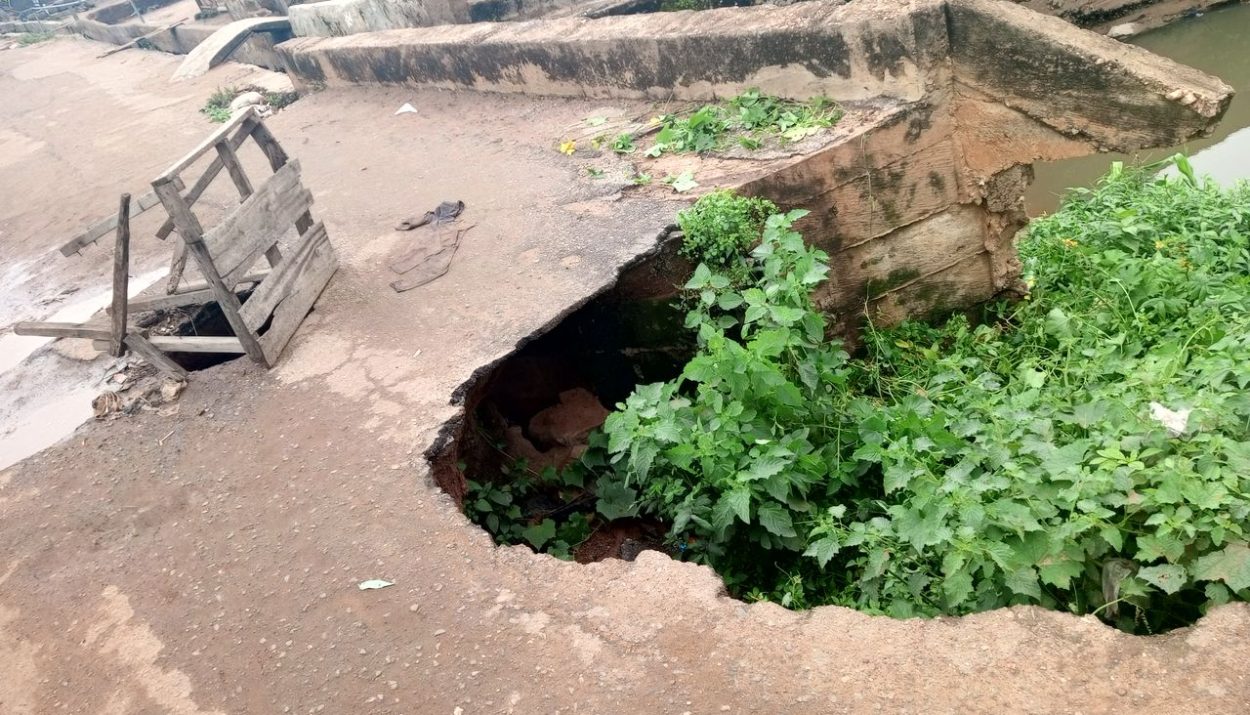
Residents of the Southeast states of Imo, Abia, Anambra, Ebonyi, and Enugu have found that wisdom begins with fear of gully erosion. Many people in the impacted areas are fleeing their ancestral homes as their houses and farmlands are being swept away by rapidly growing gully erosion sites.
Farmers in the impacted communities, for their part, are tallying their losses as their livelihood is threatened by a lack of land for other uses, biodiversity loss, bad harvests, and development of fragmented areas.
The Southeast is thought to include more than 4,000 erosion sites. Anambra State alone is responsible for more than 1,400 of the total, earning her the dubious distinction of being the state in West Africa most severely affected by erosion, according to the World Bank and other foreign aid agencies.
In September 2022, Governor Chukwuma Soludo proclaimed the state to be Nigeria’s epicenter of erosion. After meeting with Vice President Yemi Osinbajo at the Presidential Villa in Abuja, the speaker told State House Correspondents that the situation could only be saved by immediate action from the federal government and other development partners.
To lessen the problem, he claimed, his administration was raising public awareness of environmental issues.
“Other than security, the environment poses the greatest threat to our existence,” he declared. “The capital of erosion in Nigeria is Anambra.” You may be aware that between thirty and forty percent of our land is under risk of erosion; in terms of erosion, no other state compares to Anambra.
“Even last week, there was a threat of erosion everywhere—in Obosi, Oko, Nanka, and Aguolo, as well as somewhere between Ezinhifite and Osumenyin Road that was once again shut off.
As I have stated, despite the fact that erosion and other factors are causing our landmass to drastically shrink, a state government is in no position to handle this. It wouldn’t make a difference in the grand scheme of things, even if the state allocated its whole budget for the next ten years to address the erosion of gullies.
To solve the issue, Soludo did, however, reassure that his government was prepared to “partner effectively with the federal government” and other development partners.
In terms of erosion, a state of emergency has been declared. Naturally, we’re also encouraging our folks to adopt responsible citizenship so they can make some responsible decisions.
We are enforcing certain rules so that people manage the runoff water from their residences rather than simply piping it off the street. Naturally, they have to go somewhere, so keep it in your home. Building controls will identify places that are buildable against those that are drain, and so on.
Then, naturally, we’ll start addressing these issues by attempting to detect early warning signs. Clean up our drainage systems, make sure runoff waters are directed towards rivers, and so on. Do not allow them to seep onto the road or attempt to travel to undesirable locations, he urged.
Hope Uzodimma, the governor of Imo State, has bemoaned the fact that the state government was ill-equipped to deal with the erosion threat in the state.
Speaking through his deputy, Prof. Placid Njoku, Uzodinma assured the populace of his fervor for combating the threat and conveyed his shock at the extent of the devastation in the region. He also sent a “Save Our Soul” (SOS) message to the federal government, pleading with it to intervene on behalf of his people.
According to state statistics, there are more than 3000 active erosion sites in Abia. The bulk of these sites are located in Abia North, namely in the council areas of Isuikwuato, Umunneochi, and Bende.
Other erosion sites in the state include Umuchime Gully Erosion in Ogbodiukwu—Umuopara, Umuahia South Local Government Area, and Okpulukwu Gully Erosion at Umuosu Nsulu, Isiala Ngwa North Local Government Area, where two lives have been lost to the erosion.
As each year came to a close, the Nigerian Meteorological Agency (NiMet) consistently forecasted increased rainfall and the possibility of increased flooding despite the numerous erosion sites dispersed around the area.
In the meantime, the federal government had proactively passed laws creating the Ecological Fund since the 1980s in response to pleas from the governments of the numerous states devastated by the plague. Taxes support the fund, which serves as a safety net and intervention tool to assist the states and LGs in putting corrective measures into place. The fund disburses money on a regular basis.
President Bola Tinubu approved N108 billion for states to fight natural catastrophes on September 12, 2024, with N3 billion going to each state.
While welcoming Speaker of the House of Representatives Abbas Tajudeen, Vice President Kashim Shettima confirmed the permission by saying, “The President has shown his zeal, willingness and commitment to partner with the states towards addressing these issues.”
“To ensure that all states in the federation feel included and supported, he recently approved the release of N3 billion to each state to address some of these challenges.”
On his part, the speaker pledged that the House will provide the victims with all necessary assistance.
“We in the National Assembly are searching far and wide to see what kind of support we will provide to the affected people,” he declared.
We and you will make sure that we offer all the palliatives for them to reclaim their means of livelihood, thus insha Allah, it will come to pass and people will resume their regular lives and enterprises as if it had never happened.
Unfortunately, though floods have remained significant “enemies” of erosion victims in the impacted areas, the people in charge of funds intended for ecological management—including erosion and flooding—have become “bigger enemies” of these erosion victims because they misappropriate the funds on a regular basis.
While some experts claim that inadequate ecological fund implementation has made many states more vulnerable to the growing problem of floods and gully erosion, others contend that there hasn’t been any concerted legislative action to address the mismanagement issues related to the use of ecological funds.
The House of Representatives ad hoc committee’s 2023 investigation into the purported misappropriation of over N82 billion from the Ecological Fund continues to be a prime illustration of the repeated misuse of the intervention fund over time. Sadly, the investigation proved to be little more than a circus of accusations, obscene disclosures, and final case-sweeping.
According to reports, 27 states had previously rejected a second Public Complaints Commission investigation. According to the organization, between January 2020 and September 2022, a total of N177.8 billion was distributed across the 36 states and 774 local governments. Most of it, allegedly, has not been fully accounted for.
On September 14, 2023, an editorial in one of the country’s newspapers accused the organizations tasked with keeping an eye on, supervising, and enforcing appropriate accounting of being weak and compromised. The National Assembly, state Houses of Assembly, statutory auditors, and anti-graft agencies are a few examples of them. The money is considered “pocket money” by federal and state authorities, who frequently pilfer it.
“Although other governors have been charged with misappropriating ecological monies without facing consequences, only one, Joshua Dariye, the former governor of Plateau, was effectively prosecuted, imprisoned, and his conviction upheld by the Supreme Court. Of his twelve-year sentence, he completed less than three years before receiving a presidential pardon.
“Dariye stated in his rejected defense that N100 million of the N1.1 billion embezzled was utilized to support Olusegun Obasanjo’s reelection campaign.” This flimsy defense only serves to validate the way officials feel about the buffer.
“Corruption has also permeated interventions like tree-planting initiatives. The National Agency for the Great Green Wall spent N81.2 billion planting 21 million trees in 11 frontline states, the House learned in August. Projects to plant trees began in the 1980s, but despite greater financing, succeeding governments and agencies have not improved the effort, which has accelerated deforestation.
“The National Assembly’s supervision needs to be more efficient. It ought to cease allocating new cash to government agencies that are unable to properly justify their spending and account for prior financing. They should also display observable outcomes. In a similar vein, state parliaments ought to demonstrate their independence by supervising environmental projects inside their own constituencies.
“The thieves should be pursued by the anti-graft organizations. By excluding reporters from attending the hearings, the Representatives got off to a bad start. They ought to act with greater earnestness. The editorial partially stated, “Civil society organizations should increase their monitoring and whistleblowing.”