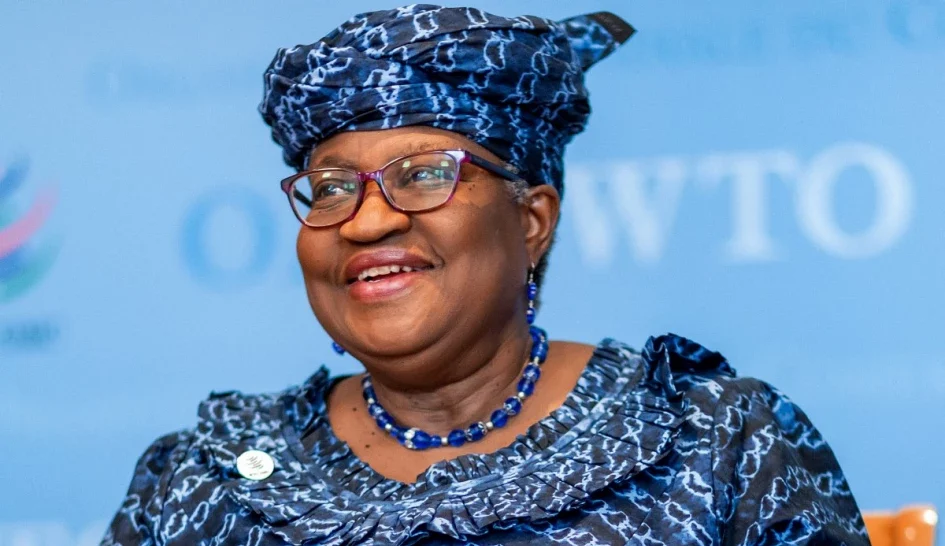

Ngozi Okonjo-Iweala, the director-general of the World Trade Organization (WTO), is running for a second, four-year term in office.
Okonjo-Iweala, a 70-year-old former finance minister of Nigeria, made history in 2021 when she was appointed as the organization’s first African and woman leader, making history for both genders.
“I’d like to contribute to this chapter of the WTO’s history, and I’m prepared to run for the job.
“For my second term, I intend to focus on delivering,” she continued, stating among the priorities were addressing “unfinished business,” Okonjo-Iweala said on Monday in a statement later confirmed by a WTO.
This project is a part of a larger endeavor by African countries to start the process early in order to take care of the “unfinished business” from her first term.
A deal to stop fisheries subsidies, make major headway in international agricultural negotiations, improve the World Trade Organization’s (WTO) deficient dispute resolution mechanism, and advance trade decarbonization are all on the agenda.
Okonjo-Iweala officially has till the end of November to decide whether or not to reapply.
However, it is believed that part of the motivation behind the African-led initiative to start this process early—which got support from many nations and started in July before US President Joe Biden’s withdrawal from the election campaign—is to guarantee her reappointment before the November elections.
This might be possible by WTO consensus regulations if no other contenders surface and every member state supports her candidacy.
Her appointment was thwarted by the administration of former US President Donald Trump in 2020; this move was seen by some as a criticism of an institution he had previously called “horrible.”
After Biden assumed office in 2021, she was once again supported by the United States.
In response to a question concerning her and the WTO’s prospects in the event of a Trump victory, she said, “I do not concentrate on that matter as it is beyond my control.”
One of the few WTO presidents in history, Okonjo-Iweala stands noteworthy for having successfully negotiated international trade agreements, notably the first part of a global pact intended to reduce fishing subsidies, which was completed in 2022.
A high-level conference earlier this year did, however, provide some minor successes: the addition of two new members and a prolongation of the agreement to forgo the imposition of digital tariffs.
Since then, several agreements—like a later fisheries agreement—have encountered challenges, mostly because of resistance from one member, India.
Geopolitical tensions among the 166 members of the organization are one of the major issues that Okonjo-Iweala noted are inherent in her work.
“You know, it’s tough. It is impossible to avoid that. However, she told Reuters, “It’s a job that motivates me to get out of bed in the morning.”
The World Trade Organization has been rendered ineffectual as a result of the Trump administration’s decision in December 2019 to oppose appointments to the body’s highest adjudicatory body. This has severely limited the organization’s ability to enforce compliance among member states.
The Biden administration maintained this approach.
Ongoing deliberations in Washington, however, center on possible changes that would eventually result in the restoration of a dispute review process.