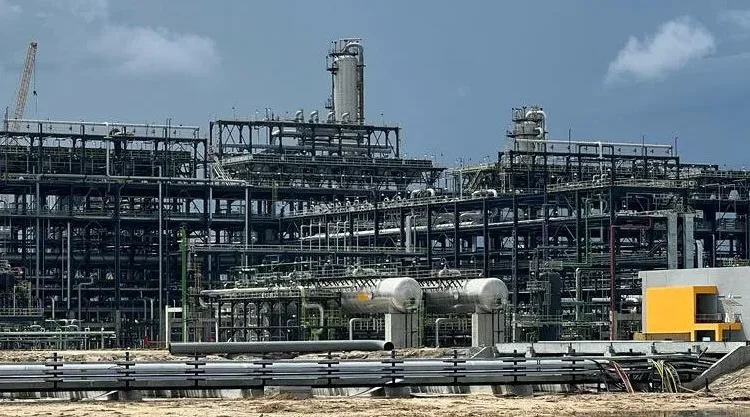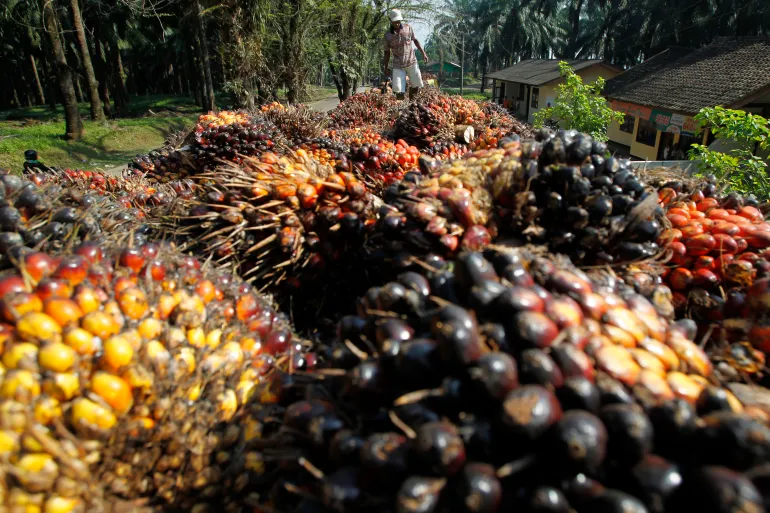

In an attempt to increase agricultural productivity and competitiveness, stakeholders are organizing efforts to unleash Nigeria’s $10 billion potential for palm oil exports.
Nigeria, which has historically been a big producer, imports $372 million a year and exports just $1.34 million worth of palm oil, placing it 78th in the world.
In a recent analysis, Vestance, a research and advising organization, identified substantial unrealized potential in Nigeria’s oil palm industry.
The report was released in Lagos on October 30 under the title “Reclaiming Lost Glory: Nigeria’s Palm Oil Renaissance.”
According to Razaq Fatai, Research Lead at Vestance, the analysis highlights the enormous potential that lies dormant in Nigeria’s underutilized oil palm farms, pointing out that the country could earn over $10 billion in export earnings alone by reviving and capitalizing these plants.
“It is now time to begin to reverse the decline and put the sector back on track,” he said, pointing out that Nigeria’s palm oil production started to fall during the 1967–1970 civil war.
Experts discussed the report’s findings and offered suggestions for reviving the oil palm industry during a panel discussion at the launch event.
Three prominent industry leaders participated in the discussion, which was facilitated by Chinwe Abuwa of Vestance, and offered their thoughts on the future of Nigerian palm oil.
Dr. Adewale Onadeko, managing director of SWAgCo (O’dua Investment Group), emphasized the importance of Nigeria adopting an agro-industrial cluster approach.
“A cluster approach incorporates critical infrastructure like seeds, fertilizers, extension services, processing, and storage,” he clarified.
“Within a 25-kilometer radius, this approach enables smallholder farmers to be integrated into a unified entity.” Businesses like Okomu and Presco have effectively used this tactic. We can greatly increase productivity and efficiency by uniting farmers and giving them the resources and information they need,” Onadeko continued.
Another panelist, Dr. Bayo Ogunniyi, Country Programme Analyst for the International Fund for Agricultural Development, emphasized the numerous obstacles smallholder farmers face, especially the predominance of outdated, low-yield seeds and limited access to financing.
In order to increase output levels, he emphasized how urgently Nigeria must provide smallholder farmers with high-quality seeds. Additionally, Dr. Ogunniyi noted that smallholder palm oil processors’ oil extraction rates are woefully poor, frequently falling below 15%, in contrast to the 25% extraction rates attained by contemporary processing mills. For Nigeria’s palm oil industry to produce as much as possible, these extraction rates must be increased.
Ramses Najem, the CEO of BulkDirect, emphasized in his own presentation the significance of placing processing facilities nearer to the fields in order to lessen transportation issues. He added, “We need to help small-scale farmers by giving them the money, processing facilities, and extension services they need.” If we wish to turn Nigeria’s reliance on imported palm oil into self-sufficiency and export potential, this assistance is crucial.
At the launch, speakers urged the creation of strategic transportation networks to optimize the supply chain, the nationwide adoption of high-yield seeds to improve production, and investments in state-of-the-art processing facilities to raise oil extraction rates.
“We at Vestance are committed to helping unlock the immense potential in African agriculture,” stated Rildwan Bello, the organization’s program manager. Through in-depth research like the Palm Oil Report, we offer insightful analysis and tactical recommendations meant to revolutionize the food and agriculture industries.
Bello urged all parties involved in the palm oil industry—government organizations, commercial investors, smallholder farmers, research centers, and development partners—to cooperate in order to restore the industry to its former heyday.