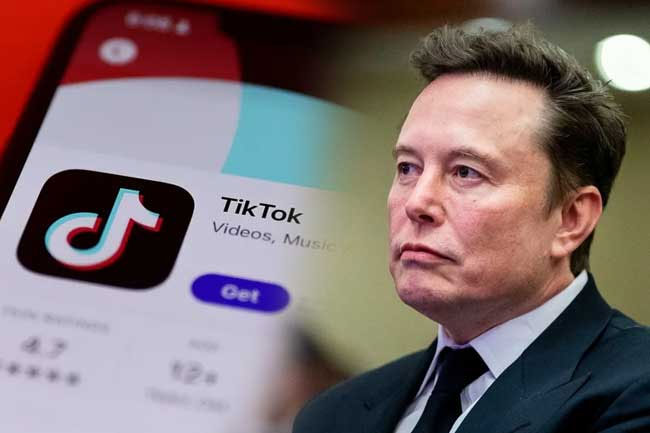

Bloomberg News has previously claimed that Chinese officials were contemplating selling the company’s US operations to Musk’s social media platform X, citing unnamed people with knowledge of the situation.
According to the article, X would buy TikTok from its Chinese owner ByteDance and merge it with the website that was formerly known as Twitter. This scenario was one that was being explored in Beijing.
A representative for TikTok told AFP, “We cannot be expected to comment on pure fiction.”
According to the research, TikTok’s US business operations are worth between $40 billion and $50 billion.
Despite being the richest person in the world right now, Bloomberg reported it was unclear how Musk might complete the deal or whether he would have to sell other assets.
Last year, a law established by the US Congress mandates that ByteDance sell its enormously successful platform or shut it down. It takes effect on Sunday, the day before Donald Trump, the president-elect, assumes office.
According to the US government, TikTok serves as a platform for propaganda and gives Beijing permission to gather information and spy on users. ByteDance and China vehemently refute the allegations.
In an appeal that reached the US Supreme Court, which heard oral arguments on Friday, TikTok contested the statute.
During the hearing, the majority of the nine-member bench’s conservative and liberal justices seemed dubious of claims made by a TikTok attorney that compelling a sale violated the First Amendment’s guarantee of free speech.
According to Bloomberg, Beijing’s contemplation of a potential Musk deal is “still preliminary,” as Chinese officials have not yet agreed on a course of action.
As a close ally of Trump, Musk is anticipated to have a significant impact on Washington during the next four years.
In addition, he is the CEO of Tesla, an electric vehicle manufacturer with a large manufacturing in China and one of its largest markets.
Trump has frequently threatened to implement further tariffs on Chinese imports, which would intensify a trade battle that was started during his first term and that former President Joe Biden mostly supported, sometimes even bolstered.