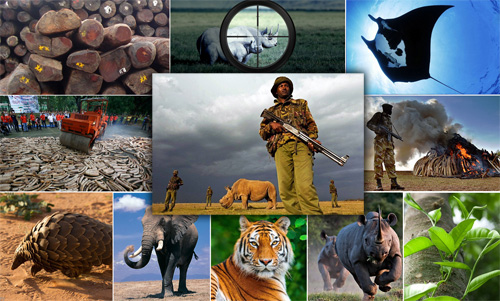

To combat the threats of illicit activities and crimes that have devastated Nigeria’s wildlife and natural heritage, the federal government, working with international partners, has made steps to examine the legislative frameworks in the country with the goal of safeguarding Nigeria’s biodiversity.
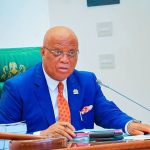
This was disclosed by Environment Minister Balarabe Abbas on Friday at the International Consortium on Combating Wildlife Crime (ICCWC) toolkit evaluation report for Nigeria launch in Abuja.
The minister stated that Nigeria is at a turning point in its attempts to protect its rich biodiversity and to stop illicit activities that endanger its natural resources and fauna.
He declared: “Nigeria is a country endowed with a wealth of endemic iconic natural resources, including some of the most diversified ecosystems in the world’s flora, gorillas, elephants, pangolins, ostriches, and lions. These advantages do, however, come with a great deal of duty.
“We have seen an alarming rise in wildlife crime over the past few decades, including poaching, illegal logging, and the trafficking of endangered species.” In addition to endangering the environment, these crimes also erode public health, natural security, the rule of law, and the livelihoods of entire communities.
The ICCWC toolkit assessment report, according to the Minister Stanley Jonah, who was representing the ministry as director of planning, research, and statistics, is an extensive and timely document that gives Nigeria a clear picture of the opportunities and challenges for bolstering its efforts to combat wildlife crime.
He emphasized the necessity of the report’s recommendations for stronger legislative frameworks, increased law enforcement capability, and better cooperation amongst national authorities.
“The Federal Government of Nigeria took several proactive steps in response,” stated Abbas. We have signed the Cooperation Agreement Framework between Nigeria and Cameroon on Transboundary Ecosystems Conservation and Sustainable Management of Wildlife and Forest Resources, enhanced the capabilities of our law enforcement agencies, and are actively evaluating our legislative frameworks.
The minister stated that wildlife crime necessitates a diverse and cooperative approach, acknowledging that it is a complicated multinational issue. He went on to say that the country may enhance its efforts by using the recommendations in the ICCWC toolkit assessment report as a beneficial reference.
He urged all parties involved, including government agencies, businesses, international partners, civil society organizations, and the private sector, to unite and reaffirm their commitment to fighting wildlife crime as they launch this significant report. He also emphasized that protecting wildlife is not only an environmental concern but also a matter of national security, economic well-being, and global responsibility.
“The World Wildlife Crime Report 2024 reminds us that the harms resulting from wildlife crime include a range of interlinked negative environmental, social, economic, and governance impacts, which are evident in the ongoing exploitation of Nigeria’s rich biodiversity,” stated Danilo Campisi, Officer-in-Charge of the United Nations Office on Drugs and Crime (UNODC) Country Office, Nigeria.
Although praising the Nigeria Customs Service for its endeavors, which have led to a rise in seizures at border crossings by land, sea, and air, Campisi stated that two-thirds of all seizures involving Nigeria were reported by foreign agencies. This implies that there is still a need to improve interception capabilities.
To discover and disrupt trafficking networks, he continued, “Enhanced information exchange and cooperation with relevant authorities in countries of origin, transit, and destination offer opportunities for intelligence-led operations and parallel or joint investigations.”
It is imperative to comprehend the necessary measures to combat the illicit trafficking in wildlife and forest products in this particular setting.
Under the general direction of the Federal Ministry of Environment, UNODC conducted the ICCWC Analytical Toolkit for Nigeria, which looks at the institutional capacities of specialized law enforcement, prosecution, and the judiciary, as well as the efficacy of the legal and regulatory environment in preventing, detecting, investigating, prosecuting, and adjudicating wildlife and forest crimes.
“This assessment offers valuable contributions for the successful execution of Nigeria’s 2022–2026 National Strategy to Combat Wildlife and Forest Crime, which was initially introduced in 2022.”
He gave the following explanation: “I urge all national stakeholders to work together to advance the implementation of these recommendations. The ICCWC toolkit report provides us with new insights and recommendations aimed to strengthen the legal and institutional response to wildlife and forest crime in Nigeria.”