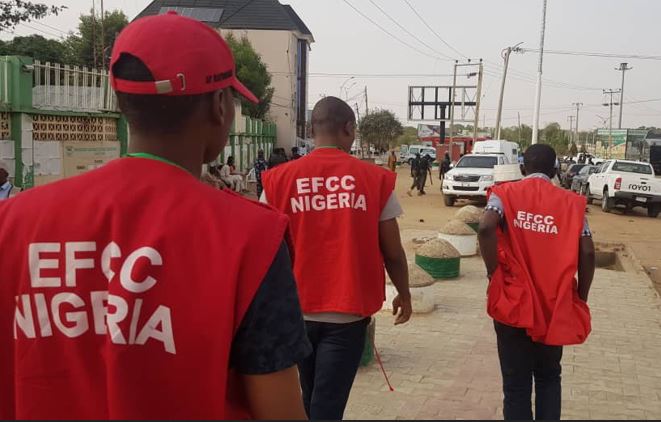

Three accomplices, Daminan Ali, Mohammed Bello Mahmud, the managing director of Downstone Ultimate Limited, and Effiong Victor Emmanuel, were also captured with Nwigwe.
They are accused of conspiring, breaking into banking computer systems, and taking money from depositors without authorization.
In a statement released in Abuja on Tuesday, EFCC Head of Media and Publicity Dele Oyewale confirmed the syndicate’s arrest.
According to the statement, EFCC agents carried out a sting operation in the capital during which the suspects were apprehended.
According to the anti-graft agency, their arrest was motivated by reliable intelligence about their alleged involvement in hacking and accessing commercial banks’ databases, which resulted in illicit transfers and withdrawals via various digital platforms.
After the investigation is finished, it is anticipated that the suspects will be charged in court.
Lagos Government: Governor Sanwo-Olu Did Not Take the EFCC to Court
The Lagos State Government, meantime, has denied rumors that Governor Babajide Sanwo-Olu has filed a lawsuit against the EFCC.
According to Naija News, Sanwo-Olu allegedly sued the EFCC, claiming that he was threatened with arrest, custody, and prosecution after his time as governor ended.
Sanwo-Olu’s attorney, Darlington Ozurumba, filed the lawsuit, which is an enforcement action for fundamental rights, before Justice Joyce Abdulmalik of the Federal High Court in Abuja.
Ozurumba declared during a court hearing on Tuesday that a revised file had taken the place of the original originating summons.
Three accomplices, Daminan Ali, Mohammed Bello Mahmud, the managing director of Downstone Ultimate Limited, and Effiong Victor Emmanuel, were also captured with Nwigwe.
They are accused of conspiring, breaking into banking computer systems, and taking money from depositors without authorization.
In a statement released in Abuja on Tuesday, EFCC Head of Media and Publicity Dele Oyewale confirmed the syndicate’s arrest.
According to the statement, EFCC agents carried out a sting operation in the capital during which the suspects were apprehended.
According to the anti-graft agency, their arrest was motivated by reliable intelligence about their alleged involvement in hacking and accessing commercial banks’ databases, which resulted in illicit transfers and withdrawals via various digital platforms.