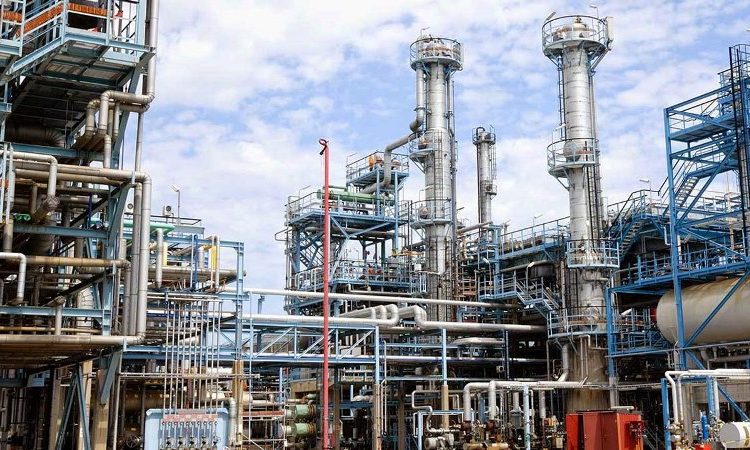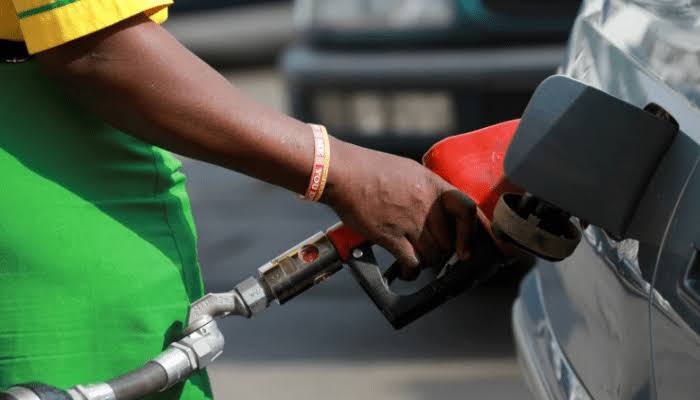

The recent decrease in the price of Premium Motor Spirit (Petrol) following a direct fuel purchase agreement between Dangote Refinery and the Independent Petroleum Marketers Association of Nigeria may reduce inflationary pressures in the upcoming months, according to Nigerian economists and financial analysts.
In separate interviews on Monday, Mr. Idakolo Gbolade, the CEO of SD & D Capital Management, and Prof. Segun Ajibola, the former president of the Council of the Chartered Institute of Bankers, revealed this information.
According to the National Bureau of Statistics’ most recent Consumer Price Index, Nigeria’s headline and food inflation rates increased to 33.88 percent and 39.16 percent in October 2024, respectively, for the second consecutive month.
The country’s inflation rate increased by 6.55% year over year and 2.64 percent month over month.
Subsequent study revealed that throughout the reviewed period, urban and rural inflation rates were 36.38 percent and 31.59 percent, respectively.
The development demonstrated the deteriorating circumstances and declining purchasing power that most Nigerians had to deal with in recent months.
In Nigeria, increases in the cost of food, transportation, medications, electricity, apparel, and other necessities are not unrelated to the inflationary pressures.
Nigeria’s inflationary pressures cannot be resolved by CBN’s monetary policies—Ajibola
In response, Ajibola stated that because Nigeria’s inflationary pressures are cost-induced, monetary policies like interest rate costs set by the Central Bank of Nigeria cannot resolve them.
He emphasized that CBN has been using the incorrect medication to combat inflation over the years.
“Inflationary issues in Nigeria cannot be resolved by monetary measures. Due to cost-induced inflation pressures, the Central Bank of Nigeria has been engaged in an unwinnable conflict.
Either an increase in the money supply or an increase in demand is to blame.
Because of the current exchange rate, imported goods are becoming more expensive to land. Every cost edge is exerting pressure locally. Therefore, the problems with Nigeria’s inflation will persist unless this is resolved,” he said.
Nigeria has not yet recovered from the withdrawal of gasoline subsidies and the Naira’s floating shocks, according to CPPE.
Nigeria has not yet recovered from the shocks of President Bola Ahmed Tinubu’s government’s June 2023 fuel subsidy removal policy and Naira floating policy, according to Muda Yusuf, Executive Director of the Centre for the Promotion of Private Enterprise.
The economy has not yet recovered from the shocks of the exchange rate and fuel price adjustments, as seen by the increase in inflation.
“Hopefully, we may see some reduction in the food prices with some of the measures being implemented by the government or contemplated under the economic stabilization plan, temporary import duty waivers, and other policies that will be fully implemented,” he said.
Nigerians have been subjected to inflationary pressures for more than 10 years — Idakolo slams CBN
According to Idakolo, the country’s inflationary pressures during the last ten years have not been affected by CBN monetary measures, such as the interest rate hike, which was 27.75 percent in October 2024.
Although the CBN has attempted a number of measures to control inflation, a number of additional variables are contributing to the rise in inflationary pressures.
“For the past ten years, the economy has been under inflationary pressures,” he said.
Fuel price reduction: Analysts discuss the Dangote and IPMAN agreement
Ajibola and Idakolo concurred that the agreement between Dangote Petrol and IPMAN for the direct sale of gasoline might be a game-changer for the holiday season and January of the next year.
The guarantee follows the signing of a deal between IPMAN and Dangote Refinery to buy 60 million liters of petroleum per week.
Over the past few days, gas prices have decreased from N5 to N50, retailing for between N1060 and N1150 per liter at filling stations.
Renowned economist Ajibola discussed the development, stating that the recent decline in gas prices, which was ascribed to the Dangote Refinery and IPMAN agreement, would help reduce inflationary pressures in the months to come.
He said, “Good enough, the direct PMS purchase agreement between Dangote Refinery and the Independent Petroleum Marketers Association of Nigeria is lowering the prices of gasoline now; this will have a ripple effect on the cost of doing business in the country.”
However, he claimed that because of Nigeria’s reliance on imports, the country’s foreign exchange fluctuations—the Naira dropped to N1690.37 per dollar on the official FX market—have been significant obstacles.
“Foreign Exchange has been really difficult. It is a significant expense that can take some time to resolve.
In a similar vein, the price of power, fuel, and energy will significantly affect inflationary pressures.
If all of the above is put into practice, he continued, “we may have gradual improvements during this year if we rely on local production and reduce import duties for some consumables.”
Idakolo added, “The agreement between IPMAN and the Dangote refinery to sell gasoline directly is a positive step since it will deter the importation of petroleum products and remove the expense of doing so.
Another method of obtaining locally refined crude at a reduced price is through the federal government’s permission to sell it to nearby refineries in Naira. If these steps are taken consistently, they will significantly reduce inflation over time.