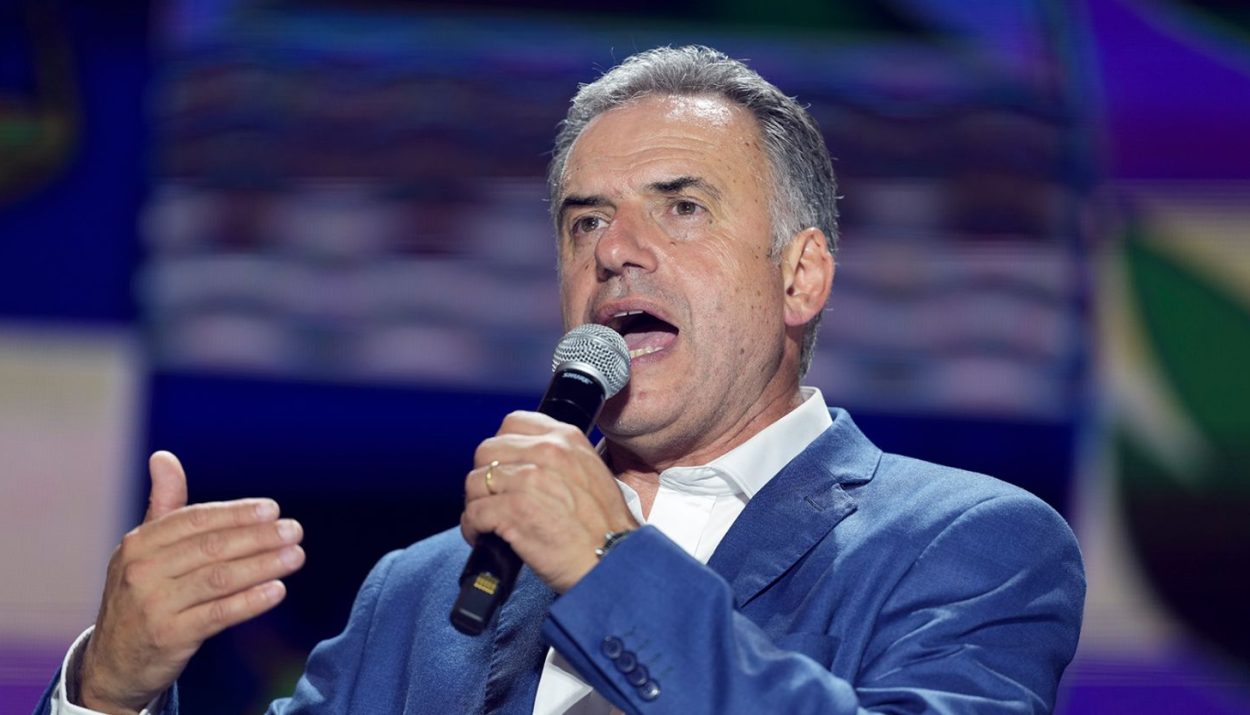

Five years of conservative government in Uruguay have come to an end with the election of Yamandú Orsi, the left-wing nominee of the Frente Amplio (Broad Front) alliance, as the country’s next president.
Orsi won a hotly contested runoff election on Sunday, November 24, 2024, according to official results.
Alvaro Delgado of the center-right National Party received 45.9% of the vote, while Orsi, who ran on a platform of harmony and communication, received 49.8%.
Orsi pledged to lead a government that looks for national consensus in his victory speech. In the capital, Montevideo, he assured supporters, “I will repeatedly call for dialogue to find the best solutions.”
The center-right Republican Coalition’s outgoing president, Luis Lacalle Pou, congratulated Orsi and offered his assistance for a seamless transition.
After 15 years of Frente Amplio rule until 2020, Orsi’s victory signals Uruguay’s return to left-wing governance. The nation became well-known throughout the world for its progressive policies at that time, which included legalizing same-sex marriage, abortion, and cannabis for recreational use.
Cheers broke out as the results were revealed in Montevideo, a bastion of Frente Amplio members, as the triumph was celebrated.
José “Pepe” Mujica, a former guerrilla fighter and president renowned for his modest lifestyle and progressive beliefs, supported Orsi’s campaign.
In order to address urgent problems including drug-related criminality and economic recovery following a historic drought and the COVID-19 pandemic, Orsi has pledged continuity rather than drastic change.
Even with the win, Orsi still has a lot of obstacles to overcome. Many Uruguayans continue to have serious concerns about rising crime, particularly that which is connected to drug trafficking. Despite its recovery, economic development is still behind because of recent regional and worldwide setbacks.
Frente Amplio won a majority in the Senate but a minority in the House of Representatives in the October parliamentary elections, suggesting that enacting significant reforms may prove difficult.
Latin American leaders praised Orsi’s win, notably Gabriel Boric of Chile and Luiz Inácio Lula da Silva of Brazil. It was “a triumph for all of Latin America and the Caribbean,” according to Lula.
One of the most stable democracies in the region, Uruguay is known for its high quality of living, low rates of poverty, and robust civic engagement, which includes mandatory voting.