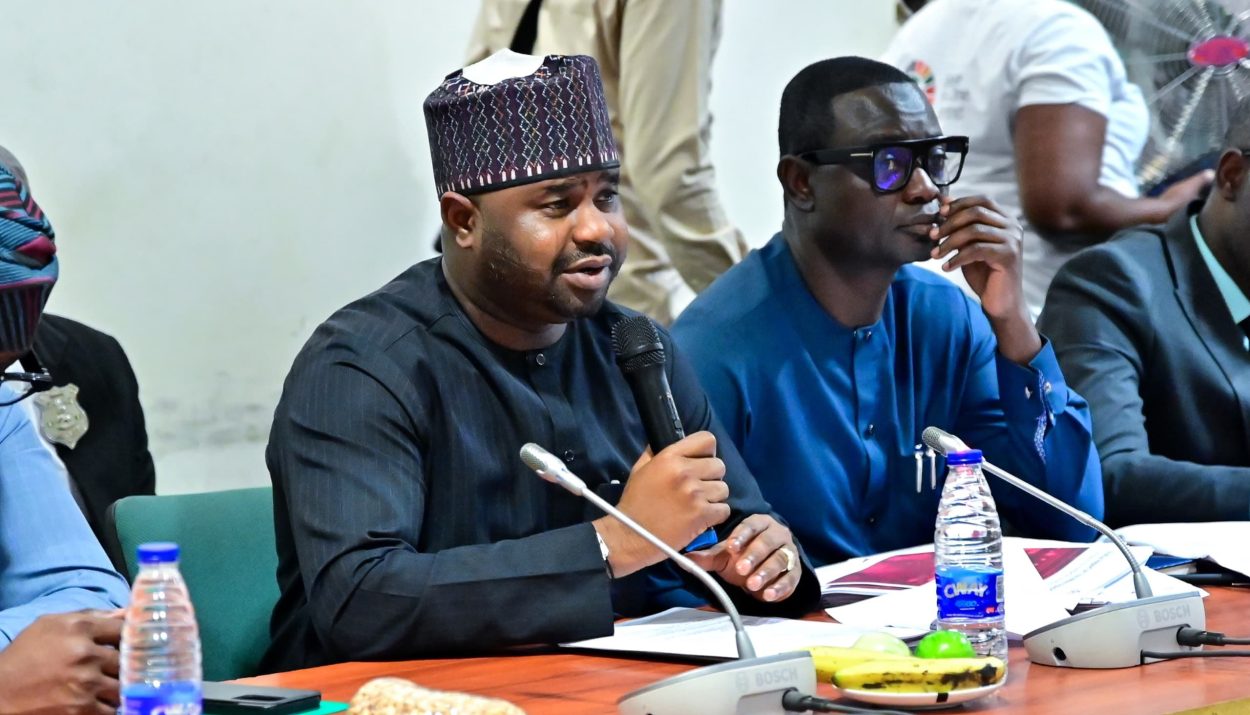

Adedeji lashed out at the current allocation system, which disproportionately favors a select few states like Lagos, Rivers, and Oyo, while speaking at a House of Representatives hearing on proposed tax reform legislation.
According to Adedeji, Lagos alone obtains 42% of VAT revenues, with Rivers receiving 16% and Oyo receiving 5.2%. The remaining 35 states and the Federal Capital Territory (FCT) receive far smaller shares.
Since most Nigerians who use the goods and services that generate VAT money are dispersed around the nation, he contended that this is unfair.
Using MTN as an example, Adedeji said that despite the telecom behemoth’s statewide operations, Lagos gains the most from its VAT contributions because of the location of its headquarters.
By dispersing VAT according to actual consumption, he reassured parliamentarians that the proposed tax reforms seek to resolve these disparities and guarantee more equitable distributions for all states.
Lawmakers’ responses to the proposed revisions have been mixed. Adamu Yusuf Gagdi (APC, Plateau) and Babajimi Benson (APC, Lagos) expressed worries about the possible effects on their states. Gagdi had concerns about how displaced people in northern states afflicted by conflict would profit from a consumption-based model, while Benson asked if simulations had been done for regions with lower VAT collections.
The Chairman of the Presidential Committee on Fiscal Policy and Tax Reforms, Taiwo Oyedele, responded by assuring interested parties that the reforms are intended to fairly benefit all states.
He explained that no state would receive less revenue under the proposed method than they already do and criticized the current “headquarters effect,” which skews VAT allocations.
In addition to redistribution, a potential rise in the VAT rate is also being discussed.
In order to bring Nigeria’s VAT rates into line with those of other African countries, the reform plan calls for gradually increasing them from 7.5% to 15% by 2030.
Oyedele, however, issued a warning against governments collecting VAT on their own, stating that doing so could lead to economic instability and lower overall revenues.
The House of Representatives has not yet adopted a stance on the measures, Speaker Abbas Tajudeen emphasized.
The goal of the interactive session was to promote understanding and agreement on the suggested reforms, which include a simplified tax administration structure and a derivation-based VAT sharing model.