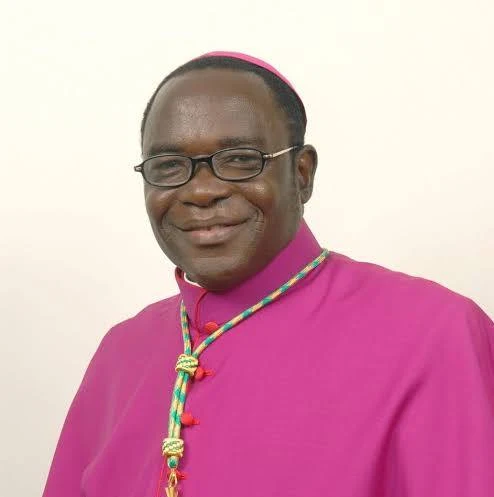

Bishop Matthew Hassan Kukah, the Catholic Bishop of Sokoto Diocese, has urged the international community not to re-designate Nigeria as a “Country of Particular Concern” over alleged religious persecution, warning that such a move could undermine ongoing efforts to foster peace and interfaith dialogue
The report, which spans 1,248 pages, documents a global decline in religious freedom, with more than 5.4 billion people living in countries where such rights are restricted.
It identifies authoritarianism, religious extremism, ethno-religious nationalism, and organised crime as key drivers of persecution across the world.
Kukah, delivering a paper, titled “A Plea and Testimony from Nigeria,” said while Nigeria continued to grapple with terrorism, insecurity, and ethnic tensions, the situation could not simply be categorised as targeted persecution of Christians.
“We are not dealing with people going around wielding machetes to kill me because I am a Christian. I live and work in Sokoto, right in the womb of Islam, where collaboration between Christians and Muslims remains possible. Our lives should be defined by a better narrative, he said.
The cleric, however, admitted that Nigeria’s security breakdown had created conditions for what he described as “genocide” in some communities, citing the federal and state governments’ failure to contain violence and protect citizens.
“Nigerians are dying unacceptable deaths across the country, not only because of their religion but also their ethnicity. We are in the cusp of a weak state with a clear lack of capacity to arrest the descent into anarchy,” Kukah lamented.
He described the eight years under former President Muhammadu Buhari as “the worst phase in interfaith relations,” accusing the administration of policies that alienated Christians and emboldened jihadists.
“Under Buhari, to gain power, it was more important to be a northern Muslim than to be a citizen of Nigeria,” he said.
In contrast, Bishop Kukah noted that President Bola Tinubu’s administration had shown inclusiveness and goodwill through recent appointments that balanced religious representation in government.
Citing the Global Terrorism Index Report 2025, Kukah acknowledged a 37 per cent decline in terrorist attacks in 2024 but cautioned that religious identity still played a decisive role in violence, particularly against Christians in northern Nigeria.
He also called on the government to ensure full constitutional compliance across all states, particularly regarding the application of Sharia law in 12 northern states, which he said fuelled mob justice and discrimination.
“The President should go to court to have the adoption of Sharia law declared unconstitutional. The secular state anticipated by the Constitution must be enforced,” he said.
Kukah further highlighted subtle forms of persecution faced by Christian minorities in the north, such as denial of land for church construction, lack of access to religious education in public schools and exclusion from employment opportunities.
On international relations, the Bishop cautioned that re-designating Nigeria as a “Country of Concern” would hinder the progress of ongoing interreligious dialogue and government collaboration with civil society.
“Such a designation will only increase tensions, sow doubt, and embolden perpetrators of violence,” he warned. “What Nigeria needs now is vigilance, cooperation, and pressure for reform – not isolation.”
The cleric also criticized past U.S. administrations, alleging that the Obama and Biden governments’ refusal to sell arms to Nigeria during the Goodluck Jonathan presidency weakened the fight against Boko Haram. He appealed to former U.S. President Donald Trump to lift restrictions and assist Nigeria in securing the tools needed to defeat terrorism.
Bishop Kukah ended on a note of optimism, commending the Vatican’s renewed global commitment to peace and inclusivity under Pope Leo XIV, and expressing hope that Nigeria could contribute meaningfully to a world free from religious extremism.
“Nigeria, a nation of over 200 million people of faith, can make a great contribution to world peace if we rid our country of religious extremism. We should be supported and encouraged in this effort, not punished,” he said.